Wednesday, May 10, 2006

The Sandbars of Negros Oriental

One of my best places for leisure is the sandbar of Manjuyod and Bais City, located about forty kilomters north of the capital city of Dumaguete, province of Negros Oriental, Philippines.

The Bais-Manjuod sandar is a piece of dryland with white sands right in the seas of the town of Manjuyod and adjacent city of Bais.

This is a site to behold, definitely an attraction for tourists.
If you are familiar with the dolphins of Bais, this is the area where the dolphins perform their acrobats to visiting tourists who are just fascinated by the place.

It is called sandbar because one can see the formation of bars of sand in the area at certain times of the day at low tide.
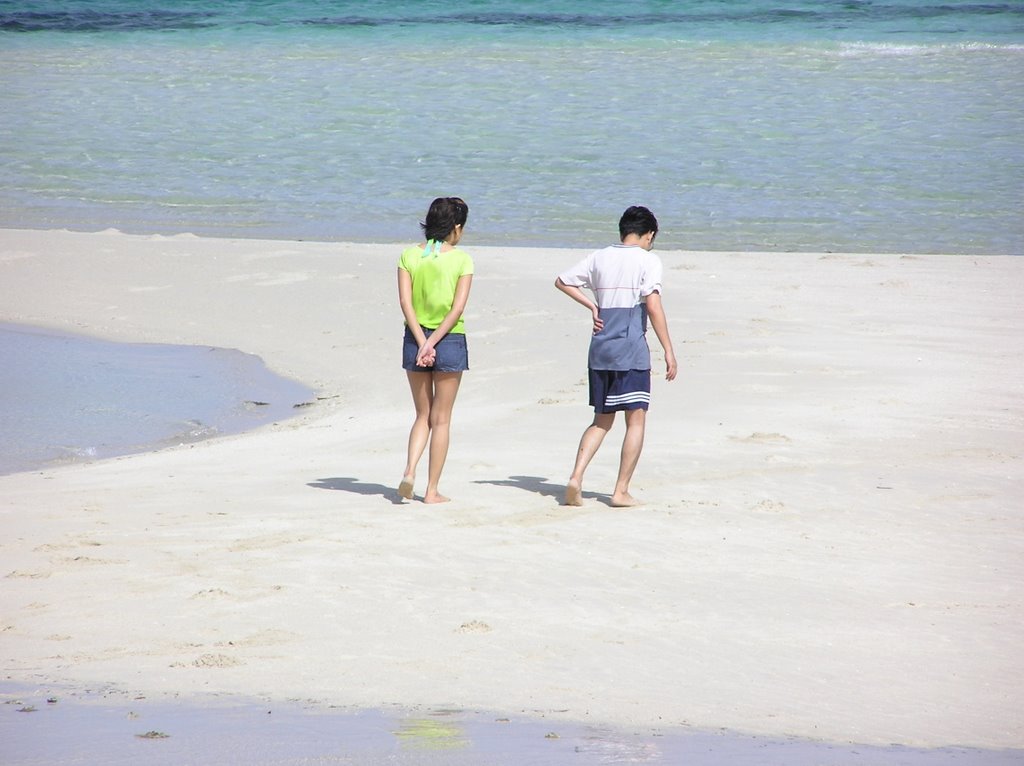
The sand bar can be seen by taking a motor boat from Bais of Manjuyod City. Just after about ten to minutes of the banca ride, you reach a protruding piece of dry mass of sand, right at mid sea.

During high tide, the sand bars are submergedand the water rises to as high as four feet. Since water is all over everyone stays at the motor boat to just dive in the water.

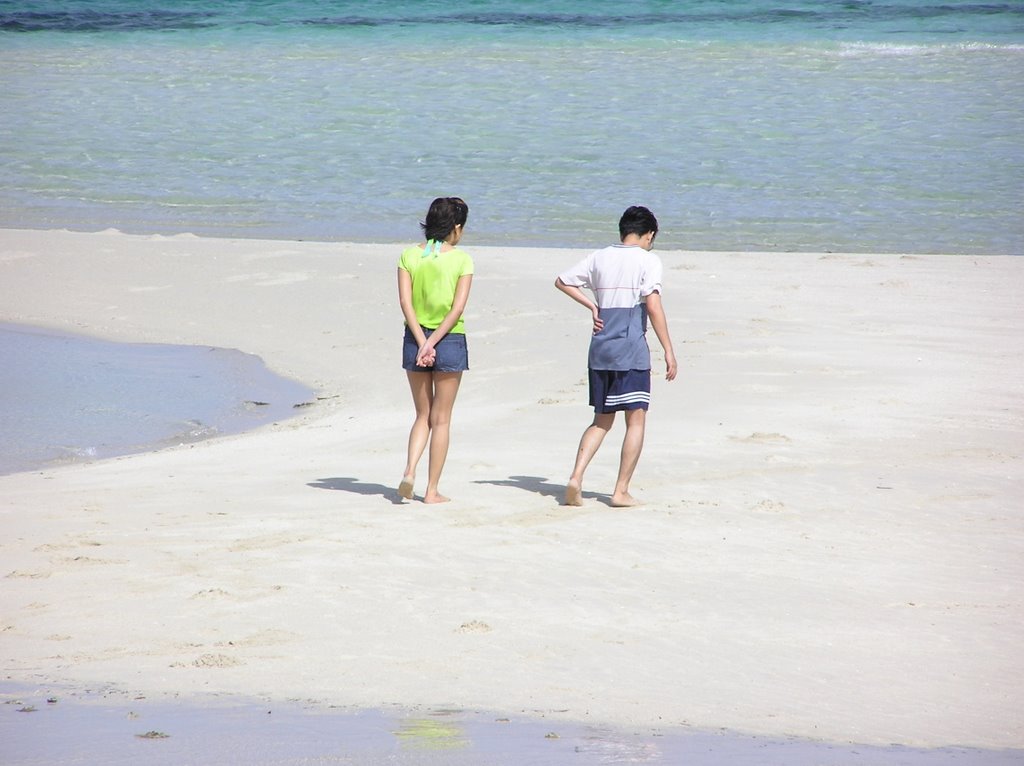
However, when it is low tide, the sand bars emerge and the area becomes dry it it becomes a perfect place to just stroll. The children can play, and as my uncle Bob said, you can even play tennis.

The motor boat you are riding will just be parked and anchored at the edge of the sand bar, where it suddenly meets the deep dark sea.

There are cottages in the sandbar where people can rent. Above the cottage, you can feel being literally surrounded by sea water.

Every summer, when I go home to the province, I visit the place everyday.

I leave Dumaguete City early in the morning, around 6 a.m. We would buy food for our breakfast at popular carenderias, like the one in Mangga district. This carenderia opens very early, selling liempo, fresh fish, tinola,.

Then we motor to Bais City which is about a forty-minute drive.
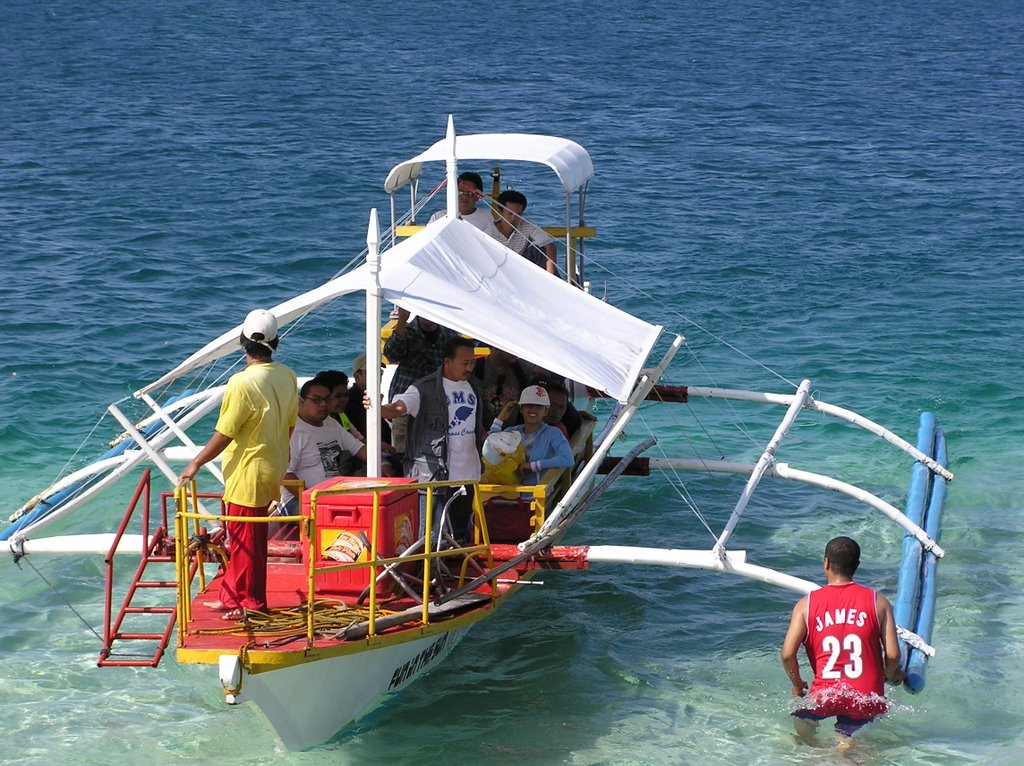
Upon reaching Bais City we proceed to the area where you can see a mini-docking area. This is the place for take off to the sand bar.

The commercial rouist motor boats are expensive because they cater specially to tourists out to view the doplphins of Tanon strait.

However, we rent the smally fishing most bancas among the locals in the area at very much cheaer price. The local fishers make more money if they lease their motor boats to us, rather than spend the whole day fishing where they find it more tiring.

By leasing to visitors of the sand bar, the fishers are relaxed because they just wait for us while we enjoy the pristine sea waters. They usually take a nap while waiting. They are "engaged to wait"--- to borrow a phrase in labor --- and are being paid for it.
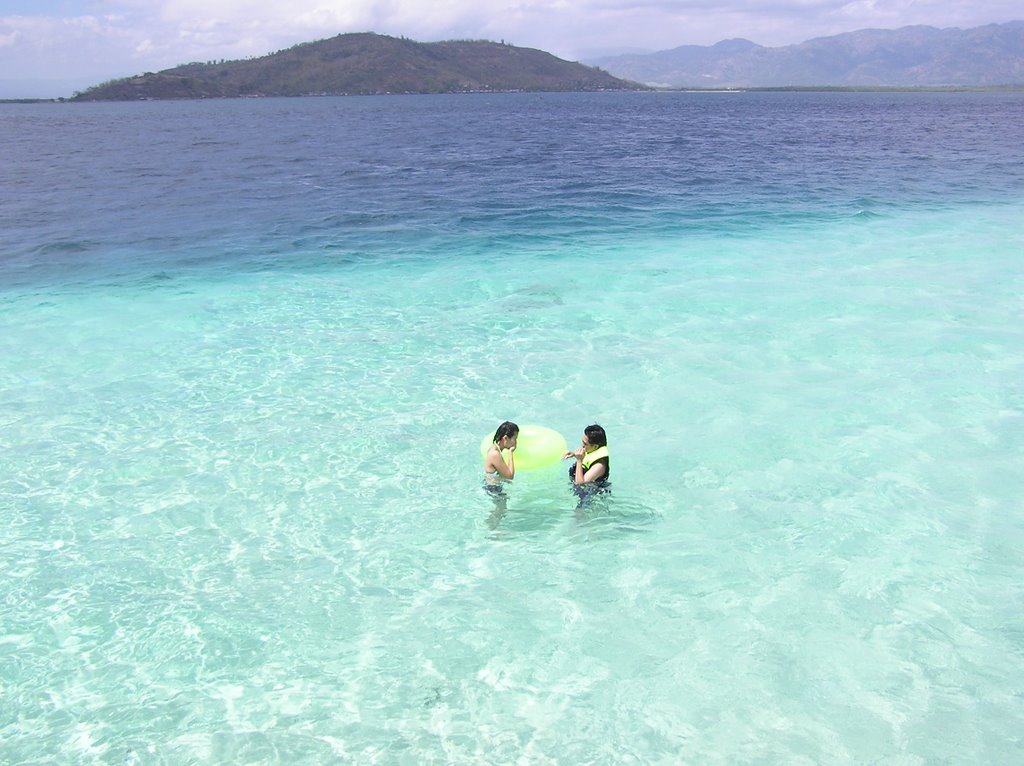
Upon ariving at the sandbars we expose ouselves under the morning sun and just roll in the sand, or wade in the shallow waters.

I still think the Manjuyod and Bais sand bars is a great potential for tourists. The tourism package should be conceptualized so that others can also savor this-one-of-a-kind experience

Sunday, May 07, 2006

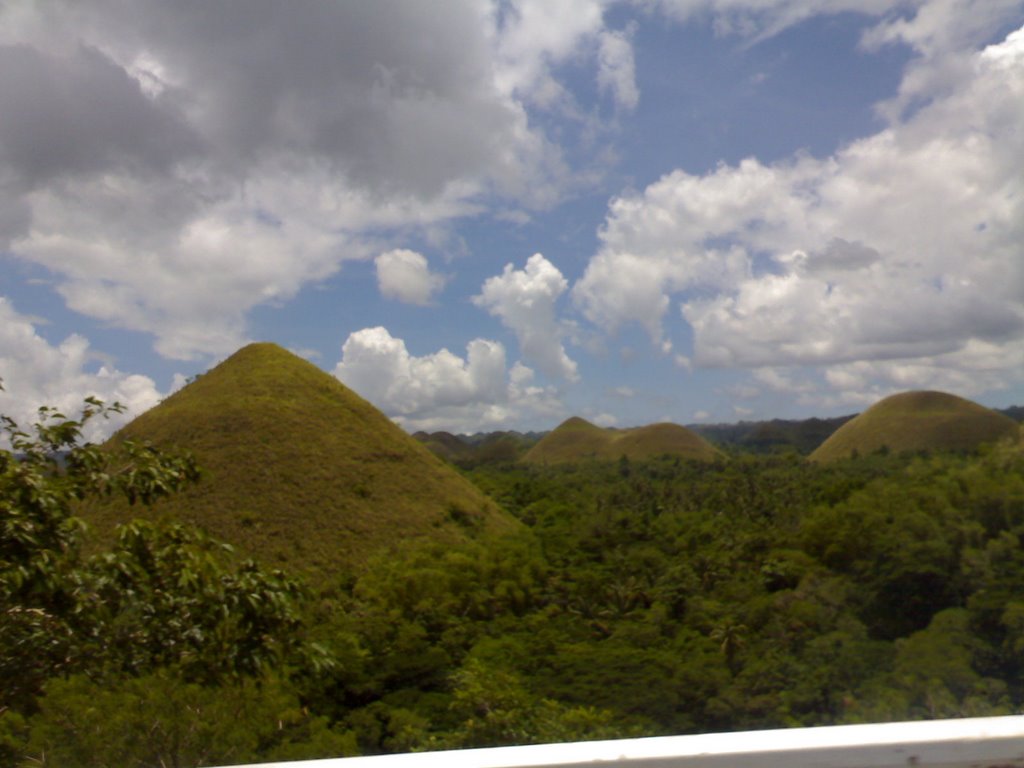
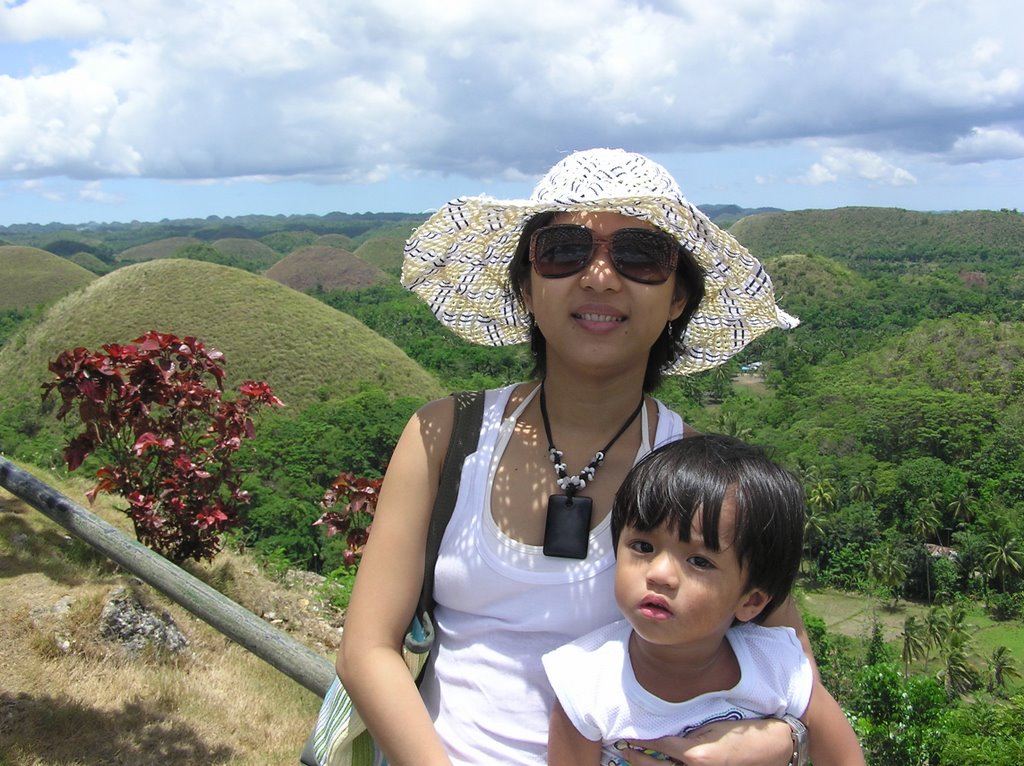
Origins of the Chocolate Hills

Out of curiousity, I tried to make some research on the origins of the Chocolate Hills of Bohol.

I am lifting this report about the origins of the Chocolate Hills published in the book of my late grandfather, Atty. Zoilo D. Dejaresco Jr., entitled "Life's Poignant Memories".

There is a re-printed article written by Justino R. Romea who was then the Public Relations Officer of the Chocolate Hills Development Committee. This committee was formed to fully develop the potential of the Chocolate Hills of Carmen as a major tourist attraction, which it is today, more than thirty years later.

The article was entitled "Choco Hills Development: a labor of love." This was also published in the Bohol Chronicle, a newspaper also published by my grandfather.

Incidentally, when the Chocolate Hills Development Committee was organized by the provincial government under the governorship of Lino Chatto, my grandfather was the chairman from the private sector.

Part of the article was about the origins of the Chocolate Hills:

"German geologist researches on Choco Hills origin

A German geologist who came to Bohol years ago to unravel the mystery of the now world-famous Chocolate Hills here recently published a scientific paper about this unusual phenomenon which is believed to be the only one of its kind in the world.

Dr. Rer Nat Frithjof Voss, a German geology expert and professor of the University of Hamburg, recently sent a copy of his research about the Chocolate Hills to the Bohol Chronicle editor-publisher who is the chairman of the Chocolate Hills Development Committee.

Dr. Voss had a stint with the University of the Philippines during which he conducted a research on the Chocolate Hills. Staying at the Chocolate Hills for several days in May 1968, Dr. Voss marveled why these hills are shaped in perfect cones.

He disclosed that he found similar hills in other countries but not as uniformly created as the Carmen Chocolate Hills.

Dr. Voss sought to answer some of the geological mysteries behind those beautiful hills through giant pictures in an air-conditioned room at the University of the Philippines.

He explained that through modern equipment, scientists can now study the geological features of a certain area including those under the bowels of the earth.

He claimed that Bohol had been under water some million years ago. The German geologist found that from Carmen down to what is now the coastal area from Tagbilaran to Loay was underwater. The rest of Bohol appeared like a horse-shoe from Maribojoc and Lila as the two ends of the U-shape island.

He said that photogrametry enables geologists to study even the subterranean composition of an area by means of photographs. Modern equipment are so accurate that there is hardly an error of one decimeter for every hundred kilometers of area.

The 17-page scientific paper is published in German. The Chocolate Hills Development Committee is requesting the Science Department of the Unviersity of San Carlos and German embassy in Manila to make a translation of the paper.

Other members of the committee later included Board Member Erico Aumentado, vice-chairman; Provincial treasurer Ramon Bitancor, Provincial Auditor Gil Cagulada, Ex-Mayor Cayetno Decasa, Engr. Sofronio Calatrava, Engr. Ramon Galang, Architect Venerando Dumadag, Engr. Basilio Sumodobila and Justino Romea.

Chocohill's legend: romantic tale of a giant

In the olden days, only giants lived on what is now the wild plateau encompassing Batuan, Sagbayan and Carmen. One of them was Arogo who was young, strong and handsome.

The females among the giants vied for Arogo's attention but he paid no heed to them all. Arogo instead kept away from his fellow giants and would rather lie alone under the bushes, there to seek out among the clouds by day and stars by night the lovely face of a native, Kam-Anggay.
Their fight continued for days until the giants got tired. Today people attribute the hills to that legendary earth-throwing.

Archeologists, however, claimed that the Chocolate Hills formed were through metamorphic process. They said that thousand of years ago, the island of Bohol was entirely covered by sea.

A series of volcanic eruptions caused irregularities at some areas of the sea beds. Water current affected the irregularities giving them their conical shape.

When the island emerged above the water, it retained the irregular surface. This theory has recently been strengthened by excavations which unearthed fossils of marine life embedded in rocks.

Recently, a German scientist came to Bohol to make a research on the Chocolate Hills. He confirmed that Bohol was entirely under water thousands of years ago judging from the fossils he discovered.

He believed that the conical hills were the products of volcanic eruptions."

Friday, May 05, 2006

The Loboc River cruise

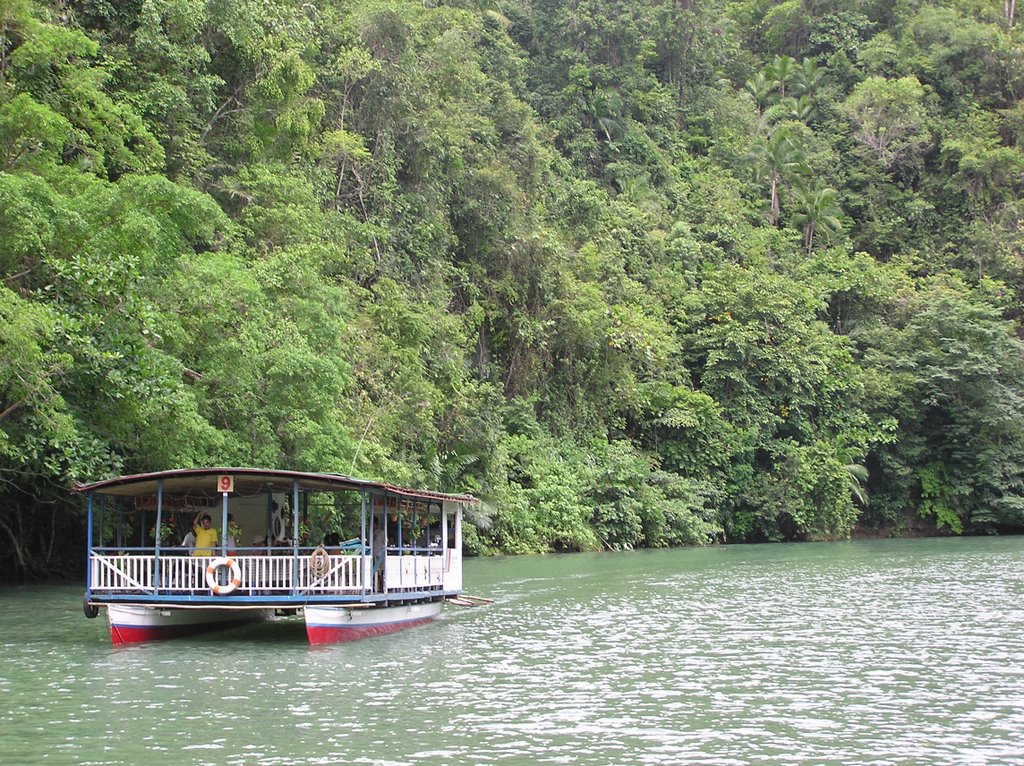
One of the main tourist attractions of Bohol province is the Loboc river cruise.

It is a one-of-a-kind adventure where one is taken for a boat ride along the river and witness the richness of unadulterated natrual resources.

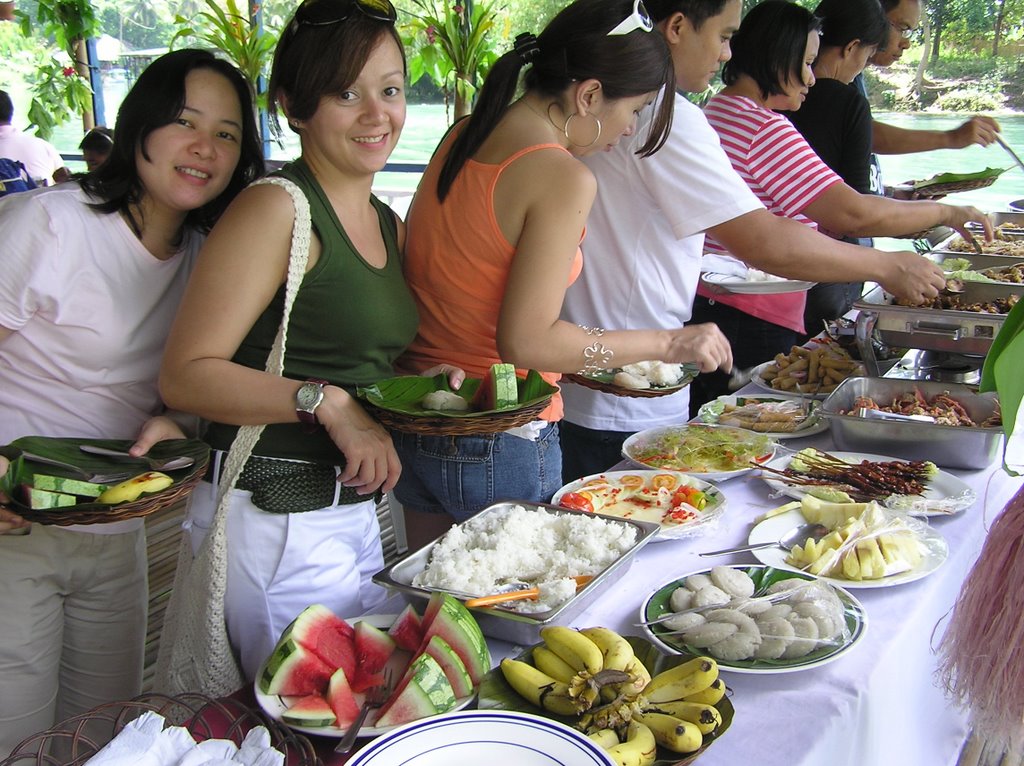
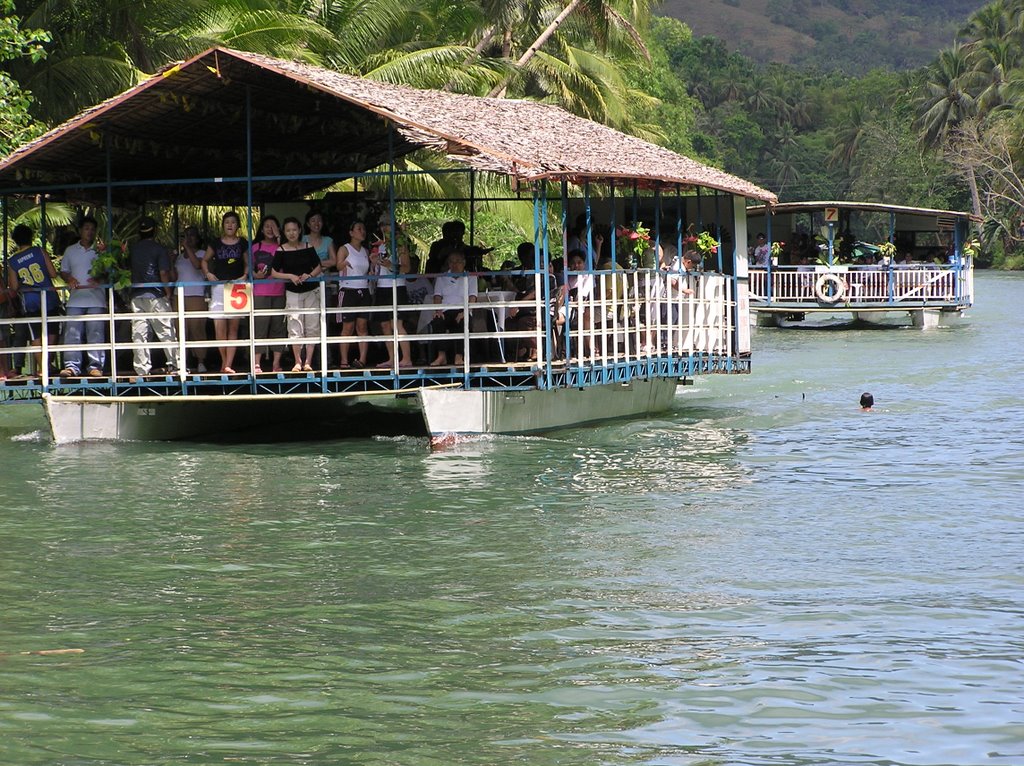
For only P260 per person, one is entitled to a buffet lunch on board the locally built catamaran type vessels which can accomodate more than thirty persons per trip. It becomes a floating restaurant.

Visitors then stream along until they reach the tip where the source of the endless flow of fresh water can be seen like mini-water falls.

The boat is described as a catamaran because it has two parallel hulls that keeps the platform bearing the passengers afloat.

However, it is noticeable that the the floating platform itself is not mechanized. A powerful motor launch behind the platform pushes it to move forward.

When the passengers embark, they immediately take their buffet lunch, before the boat departs.

Evereyone must be able to get their food and settle on their respective tables before the boat leaves. This way, the food and drinks don't spill. Also the visitors are already seated comfortably before the boat is put to motion.

Lunch is sumptuous. There are pork barbique, vegetable salad, steamed crab, clam soup, lumpia shanghai, adobo. Locally grown fruit abound like banana, mangoes, watermelon, among otghers.

While on the cruise the passengers are entertained by musical talents singing folk, country and popular native songs.

The Loboc river cruise has become one of the main attractions of the day-tours in Bohol. The tour operators see to it that the day-tour would involve lunch at Loboc river.

For this reason, all of the visitors of Bohol who are on a day tour converge at the Loboc river at lunch time, in time for the buffet lunch.

This has created some problems for the operators. Due to the growing number of visitors everyday, everyone seems to be converging in one place at a common time, which is at lunch time.

While there are several trips beginnning around 11 a.m. until 1:30 p.m. it seems the number of passengers are growing in number since the Loboc trip is fast becoming a popular destination.

For this reason, operators are contemplating on having river cruises in the evening, serving buffet dinner, instead of lunch.

In this way, visitors are dispersed at different time intervals.

However this is still in the planning stage because there are amenities that need to be established in order to have evening river cruises like the lightings along the river banks.


Young Executive Judge assumes

A young executive judge has assumed his post in Dumaguete City.

Cenon Voltaire Repollo, thirty-five years old was recently appointed executive judge of the City Trial Court in Dumaguete City.

Repollo, who comes from Tanjay City, worked as a court attorney in the Supreme Court under the office of retired chief justice Hilario G. Davide Jr.

Prior to his stint in the government, Repollo worked as a corporate counsel for the Vallacar (Ceres) transport, one of the country's leading land trasnportation companies.

He graduated from Silliman University High School in 1988. He took up business studies at the College of Business Administration of Silliman and graduated in 1992.

After graduation, he took up law and earned his bachelor of law degree from the Jesuit-run Xavier University in Cagayan de Oro City in 1997. He passed the bar the following year.

He then embarked on private law practice as counsel for Vallacar Transit, owner of Ceres transport for the Mindanao area.

He transferred to Manila after being accepted as a court attorney in the Supreme Court.

Repollo will preside in one of two salas of the city courts in Dumaguete City. He took over the sala vacated by Judge Maxino who was elevated to the Regional Trial Court.

Tuesday, April 25, 2006

Beating Filipino Time

Yesterday I learned perhaps one of my life's more important lessons.
I realized the value of being "on time". That is to beat the unsavory characterization of our race, which is also called the "Filipino time".
Yesterday, I was tasked to prepare facilitate the orders for dinner in a restaurant with some acquaintances.
I was told that guests would be arriving in the Makati restaurant at around 7:00 to 7:30 p.m.
So, being based in Makati I was the logical person to go to the restaurant early and make reservations and order the food in time for the arrival of the guests.
I went to the restaurant early enough, at 6:30 p.m. I told the restaurant manager that I was reserving a table for 16 persons who were to arrive between 7:00 to 7:30 p.m.
The restaurant manager said they normally do not allow reservations because of the fast turnover of their customers. They couldn't afford to have tables idle for a long time.
But since there were quite a number of guests who were expected to arrive, and I ordered a number of food items in their menu, they prepared a long table for 16 persons.
The problem was that the guests did not arrive on time.
For one reason or another (as always, traffic was the common reason) the guests did not arrive at the designated time.
The restaurant kept on coming back to where I was seated and asked when they would prepare the food on the table since the appointed time had come and gone.
I had to send text messages to the guests, asking them where they were and when they could make it.
The guests arrived at 8:00 p.m.
There was one lesson I learned.
I felt the feeling of a person who has to wait for others who are not able to arrive at the appointed time.
It is not about the guests. It was not their fault that they were late. After all they probably tried their best to come on time, but must have been stuck in traffic.
But the situation I was in made me realize the importance of being on time.
I can now emphatize with people who are prompt in arriving at meetings, and who have to wait for the others who come in late.
For many times in my life, I have always been a person who arrived late.
I am not punctual.
I am a far cry from my late grandfather who mastered the art of beating the Filipino time.
My grandfather always had a rule that he must arrive at the designated place ten minutes before the appointment.
It was as if it was his personal crusade to beat the Filipino time.
Once, I drove my grandfather to a meeting and I could very well remember that we arrived at the place of appointment ten minutes before 7 o'clock p.m., the time of the dinner appointment.
My grandfather just told me to park the car and wait a while before disembarking and heading to the place of appointment. What discipline!
I can say that from now on, I will strive to be more mindful and conscious of making it on time during my appointments.
Imagine, I always had this attitude of being late for a few minutes when attending court hearings, thinking that "the judge never starts on time anyway."
There are many changes that I need to make.
I know that it is very hard to teach an old dog new tricks.
But this in one new trick I'd be eager to learn.